
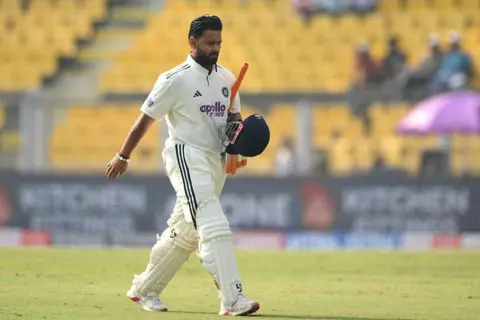
India's shocking 0-2 series loss to the Proteas in the recent red-ball series has sent shockwaves through the squad.
Just days ago, South Africa inflicted upon India their heaviest defeat in terms of runs, defying expectations. It marked South Africa's maiden series victory in the subcontinent in two and a half decades and the host nation's second defeat at home in just a year after a decade-plus without a home loss.
The winning rhythm established in the previous half-year has all but vanished and the futures of a number of cricketers - as well as head coach Gautam Gambhir - are now uncertain.
A Promising Start Disappears
The young team's commendable display in England this season, under a different skipper, suggested a seamless changeover after the almost concurrent retirements of key players R Ashwin, Sharma, and Kohli.
An easy 2-0 triumph over the Windies at the start of the home season enhanced that perception, until the Proteas turned up and handed out a devastating defeat.
India were somewhat unlucky that skipper Gill suffered an injury early on in the opening Test and took no further part in the series. But that neither explains nor absolves the team of the terribly sub-par performance in each match against the opposition.
Several established players were damaged, and a few members eyeing lengthy Test careers were shown as not yet good enough - technically or mentally - for the format.
Concerning History
It was the second series sweep in home conditions endured by India in just a year. Last year, unfancied New Zealand had secured a surprising 3-0 win which practically cost the hosts a spot in the World Test Championship (WTC) final.
The fresh failure to South Africa could damage India's hopes of qualifying for the showpiece of this edition as well.
Previously ranked third in the WTC rankings before the series, the side have dropped to number five. Even though nine further games are still to come, a majority are against Australia. Usually, performing in familiar conditions would be a huge advantage - including against the mighty Aussies. Yet the failures against New Zealand and the Proteas offer no room for such assurance.
Roots of the Decline
India's frailty in Test cricket has been significantly highlighted. However, why India have fared so badly in Test matches on home soil in recent times is still bewildering.
In the 21st century, the Indian cricket team were seen as unbeatable in Test cricket in home conditions. Under sweltering weather and on tracks that assisted spinners and benefited their players, the hosts faced little challenge. The occasional loss, such as in 2012-13 against England, was considered an aberration.
Now, India look to be beatable at home.
Versus New Zealand in last year and the Proteas currently, the home side were hoisted by their own petard. The tracks they prepared to help their style failed miserably, as the opposition used them more effectively, outplaying India's batsmen and bowlers when it mattered most.
What Happened?
Certain analysts propose that the Indian team is floundering at home because domestic pitches have been modified from spinning tracks to quick wickets to train the squad to do well abroad.
A few mention that the Indian Premier League (IPL), in which many overseas players participate, has removed the surprise and difficulty subcontinental pitches would present to them in the past.
Although there is a degree of accuracy in both analyses, it fails to account for why the team's showings at home have experienced such a sharp fall.

Several Weaknesses
Many past stars identify a complex, multi-headed problem, not just one or two factors.
Experts and participants have highlighted several failings following India's disappointing performance to the South Africans: underestimating the opposition, lack of preparation, flawed selections, overconfidence, constant chopping and changing of the team lineup, and emphasizing white-ball over the longer format.
This was obvious in the showings of the squad.
Members like Pant and Jaiswal, of whom so much was expected, paid for their carelessness, while Sudarshan, Reddy, and Jurel - who were aiming to establish their position in the squad - came up short in skill and mindset, facing the fallout for their nonchalant approach.
Only a handful - Ravindra Jadeja, Bumrah, Kuldeep, Mohammed Siraj and Sundar - fulfilled their talent and reputation - but not well enough to win matches.
Management Questions
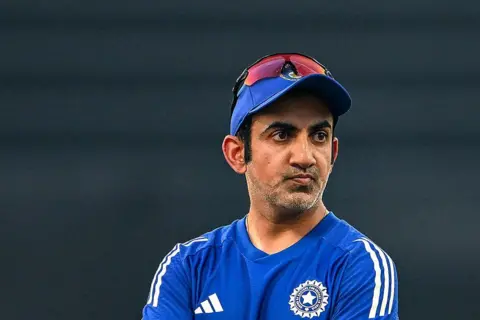
The review also included just the players - the selection panel and backroom team were also under fire, spurred on by upset followers and critical former players. Under focus of the criticism was head coach Gautam Gambhir.
At his post-series press
